
Rai (Mustard Seed) Pillow vs Kapok Pillow for Babies: What Paediatricians Recommend
When it comes to choosing a pillow for babies and young children, parents often hear about traditional options such as rai ka takiya (mustard seed pillow) and newer natural-fibre options such as kapok pillows. Both are often promoted for their natural materials and comfort, but baby sleep safety should always come before material, softness, or traditional use.
For infants, the most important question is not simply whether a rai pillow for baby is natural or whether a kapok pillow is softer. The more important question is whether a pillow should be used at all during sleep.
Major safe-sleep recommendations advise that infants should sleep on a firm, flat, non-inclined sleep surface without pillows, loose bedding, or other soft objects. The American Academy of Pediatrics (AAP) specifically recommends keeping pillows and other soft objects out of an infant's sleep area because they can obstruct the nose and mouth and increase the risk of suffocation.
So, before comparing rai and kapok pillows, parents should understand the basic safety recommendations and the appropriate age for introducing a pillow.
Paediatricians Recommend Safe Sleep First

1. Medical Guidelines
Major medical guidelines focus on creating a simple and safe sleep environment for babies.
For infants, the recommended sleep setup is a firm, flat, non-inclined mattress with a fitted sheet and no pillows or soft objects. Babies should generally be placed on their backs for every sleep.
This means that parents should not assume that a pillow becomes safe simply because it is made from natural materials such as mustard seeds, cotton, kapok, or other fibres.
A rai pillow for baby may be traditionally used in some Indian households, but traditional use and medical safe-sleep recommendations are two different things. Parents should follow age-appropriate sleep guidance and ask their paediatrician if their child has a specific medical or developmental need.
2. Suffocation Hazard
One of the main concerns with pillows during infant sleep is the possibility of airway obstruction.
A sleeping baby may move their head into a pillow or another soft object. If the material covers the baby's nose or mouth, the baby may not be able to move away from it effectively. Soft objects can also create spaces where the baby's face becomes pressed against the material.
The AAP recommends keeping pillows, pillow-like toys, quilts, comforters, and loose bedding away from the infant's sleep area because these objects can obstruct the baby's nose and mouth.
For this reason, asking “is rai pillow safe for newborn?” should start with the broader question: Does the baby actually need a pillow at this age?
For newborns and young infants, the answer during sleep is generally no.
3. Flat Head Concerns
Many parents consider a pillow because they are worried about flat spots developing on their baby's head.
This is understandable, particularly because babies spend a significant amount of time lying on their backs. However, using a pillow or specially shaped sleep product is not a substitute for appropriate developmental activities and professional advice.
Supervised tummy time while the baby is awake can help babies develop neck, shoulder, and upper-body strength. Parents should follow their paediatrician's advice regarding tummy time, especially if the baby was premature or has another medical concern.
If parents notice a significant or persistent change in the shape of the baby's head, they should discuss it with a paediatrician rather than relying on a pillow to reshape the head.
Rai Pillow vs Kapok Pillow: What Is the Difference?

Once a child is old enough for a pillow, parents may begin comparing different materials.
Two natural options commonly discussed in India are mustard-seed pillows and kapok pillows.
A traditional rai or mustard-seed pillow is generally filled with cleaned mustard seeds. Its filling can move inside the cover and may feel different from a conventional fibre pillow.
A kapok pillow is made using kapok fibre, a natural plant fibre obtained from the seed pods of the kapok tree. Kapok is lightweight and is often used in natural bedding products.
However, being natural does not automatically mean that a pillow is appropriate for every age group.
The safety, size, firmness, construction, cover, filling, and intended age range of the product all matter.
Therefore, the comparison of rai pillow vs kapok pillow should only become relevant after a child is developmentally ready to use a pillow.
Is a Rai Pillow Safe for Newborn Babies?
The short answer is that parents should not use a rai pillow for routine newborn sleep unless specifically advised by a qualified healthcare professional for a particular medical reason.
Newborns do not need a pillow under their head for normal sleep. The safest sleep environment is a firm, flat, non-inclined sleep surface with no pillows or loose soft objects.
This is important because parents may think that a small, firm, or traditionally designed pillow is safer than a regular soft pillow. However, the concern is not only softness. Any pillow placed in an infant's sleep area can become an object against which the baby's face rests.
The FDA also cautions parents against baby products marketed with claims about preventing or reducing SIDS and specifically includes pillows among products for which such claims can be unsafe or unsupported.
Therefore, parents should be cautious about products marketed as helping prevent SIDS, reshape a baby's head, or guarantee safer infant sleep.
Does a Mustard Seed Pillow Shape a Baby's Head?
The idea that a mustard seed pillow shapes a baby's head is commonly discussed in traditional baby-care practices. However, parents should distinguish traditional beliefs from established medical evidence.
There is not enough evidence to say that a mustard-seed pillow should be routinely used to shape an infant's head.
A baby's skull is naturally soft and developing during infancy. If parents are concerned about head shape, the appropriate approach is to discuss the baby's head growth and development with a paediatrician.
Some babies develop positional flattening because of the amount of time they spend in one position. This does not mean that parents should introduce a pillow into the baby's sleep environment.
Instead, parents can discuss supervised tummy time and other age-appropriate positioning activities with their healthcare provider.
When Can Baby Use Pillow?
There is no universal age at which every child must start using a pillow.
The question of when can baby use pillow depends on the child's development, sleeping environment, and individual needs.
For infants, safe-sleep guidance recommends no pillows in the sleep area.
As children grow older and become toddlers, parents may consider introducing a pillow. At that stage, the choice should focus on an appropriately sized, age-suitable product rather than simply choosing the softest or most natural option.
Parents should also check the manufacturer's recommended age range and follow their paediatrician's advice if the child has any medical or developmental condition.
How Can I Prevent a Flat Head in My Baby Naturally?
Parents concerned about flat head in babies and how to fix it should first speak with a paediatrician.
One commonly recommended approach is supervised tummy time while the baby is awake. Tummy time gives babies an opportunity to develop their muscles and spend less time resting on the back of the head.
Importantly, tummy time is different from tummy sleeping.
Babies should still be placed on their backs for sleep. The AAP recommends back sleeping for infants and a firm, flat, non-inclined sleep surface.
Parents should never place a baby face-down on a pillow or soft surface simply to change the shape of the head.
If the baby's head shape appears significantly uneven or does not improve, professional evaluation can help determine whether further treatment or monitoring is needed.
Mustard Seed Pillow Side Effects and Safety Considerations
A mustard-seed pillow may appear simple because it contains a traditional natural filling, but parents should still consider potential safety issues.
Possible concerns include:
-
The pillow may move during sleep.
-
The baby's face may come into contact with the filling or pillow surface.
-
A pillow can become an obstruction around the baby's face.
-
Small or loose filling materials can create additional hazards if the cover becomes damaged.
-
Some babies may have skin sensitivity to particular materials or fabrics.
-
A pillow may encourage parents to place the baby in an elevated or unusual sleeping position.
These concerns are particularly important during infancy.
The AAP recommends keeping pillows and other soft objects out of an infant's sleep environment to reduce the risk of suffocation, entrapment, and other sleep-related hazards.
Is a Kapok Pillow Good for Toddlers?
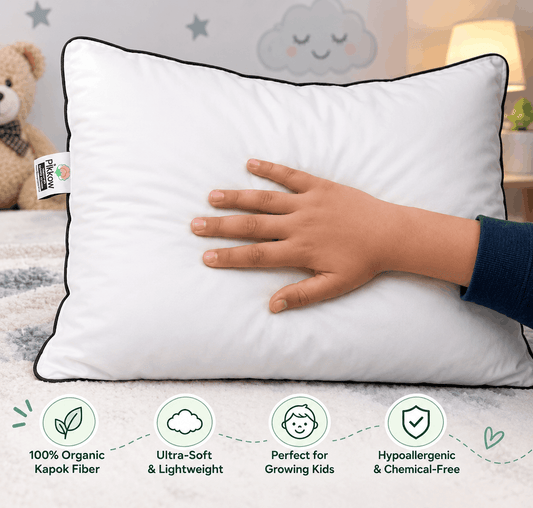
Kapok is a natural plant fibre and is known for being lightweight and soft. Because of these characteristics, kapok products are sometimes considered when parents begin searching for natural bedding for older children.
However, a kapok pillow for toddler use should still be selected according to the child's age and the manufacturer's specifications.
Parents should look for:
-
An age-appropriate size
-
Appropriate firmness
-
Good-quality stitching
-
A secure cover
-
Easy-to-clean construction
-
Clear product safety information
-
A design intended specifically for children
A natural filling alone does not determine whether a product is suitable for a particular child.
For younger toddlers or children with specific medical needs, parents should ask their paediatrician before changing the child's sleep setup.
Rai Pillow or Kapok Pillow: Which Is Better?

The answer depends largely on the child's age and whether the child is developmentally ready for a pillow.
For a newborn or young infant, the important consideration is not choosing between rai and kapok. Safe-sleep recommendations advise keeping pillows out of the infant's sleep area.
For an older child who is ready for a pillow, parents can compare materials based on comfort, size, firmness, breathability, maintenance, durability, and the child's individual preferences.
A rai pillow may appeal to families who prefer traditional Indian bedding materials, while kapok may appeal to parents looking for a lightweight natural fibre.
Rather than claiming that one material is universally better, parents should select a product appropriate for their child's age and sleeping needs.
What Should Parents Look for in a Baby or Toddler Pillow?
If a child is old enough for a pillow, choosing the right product requires more than simply searching for the best pillow for toddler in India.
Consider the following:
Age-Appropriate Design
Always check the recommended age range. A pillow designed for an older child may not be suitable for a younger toddler.
Suitable Size
A child's pillow should be appropriately sized for the child's body and sleeping arrangement. An excessively large pillow may not be appropriate for a young child.
Comfortable Firmness
The pillow should provide suitable support without being excessively soft or bulky.
Safe Construction
Check that the cover and seams are securely made and that the filling cannot easily escape.
Easy Maintenance
Children can sweat, spill liquids, or have accidents during sleep. A washable or easily maintainable cover can therefore be practical.
Avoid Unsupported Health Claims
Parents should be cautious of products claiming to prevent SIDS, cure medical conditions, reshape a baby's head, or guarantee better health. The FDA specifically warns against baby products promoted with unsupported SIDS-prevention claims.
Conclusion
Choosing between a rai pillow for baby and a kapok pillow should never begin with the question of which material is more natural. For infants, the priority is creating a safe sleep environment.
Current safe-sleep recommendations from the American Academy of Pediatrics advise placing infants on their backs on a firm, flat, non-inclined sleep surface and keeping pillows, loose bedding, and other soft objects out of the sleep area.
Traditional rai ka takiya may have a place in cultural baby-care practices, but that does not mean it should be used during infant sleep. Similarly, kapok is a natural fibre, but a kapok pillow for toddler use should be considered only when the child is developmentally ready and the product is appropriate for their age.
When in doubt, parents should discuss pillow use, head shape, sleep position, or any special sleep requirement with their paediatrician.
FAQs
Is a rai pillow safe for newborn babies?
Newborns generally should not sleep with a pillow. Safe-sleep guidance recommends a firm, flat, non-inclined sleep surface without pillows or other soft objects in the sleep area.
Does a mustard seed pillow shape a baby's head?
There is not enough evidence to recommend mustard-seed pillows for routinely shaping an infant's head. Parents concerned about head shape should discuss it with a paediatrician.
At what age can a baby use a pillow?
Infants do not need pillows for routine sleep. The appropriate time to introduce a pillow varies by child, so parents should consider developmental readiness, product guidance, and professional advice.
Is a kapok pillow good for toddlers?
Kapok can be used in children's bedding products, but suitability depends on the child's age, the specific product, its size and firmness, and its safety instructions. A natural material does not automatically make a pillow suitable for every child.
What is the right age to give a baby a pillow?
There is no single universal age that applies to every child. During infancy, pillows should be kept out of the sleep environment. For older children, parents can consider an age-appropriate pillow based on the child's development and sleep needs.
Can a pillow prevent flat head in babies?
A pillow should not be used as a routine method to prevent or correct flat head during infant sleep. Supervised tummy time while the baby is awake and professional guidance are more appropriate approaches.
Is rai pillow better than kapok pillow?
For infants, neither should be considered a substitute for a safe, pillow-free sleep environment. For an older child who is ready for a pillow, parents can compare rai and kapok based on age suitability, size, firmness, construction, maintenance, and comfort.
What should I look for when buying a toddler pillow in India?
Check the recommended age range, size, firmness, construction, filling security, washable cover, and product instructions. Avoid relying on unsupported claims that a pillow can prevent SIDS or treat medical conditions.